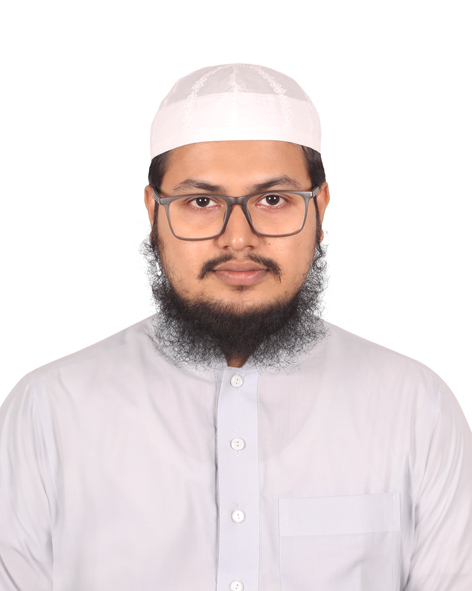
الشيخ معاذ الجهني القاسمي، خادم طلبة العلم والمسلمين، نبت في رياض العلم والمعرفة، حيث وُلد في عام 1999م بمحافظة كشورغنج، وتشرّب علومه في دار العلوم ديوبند بالهند. ارتحل في طلب العلم حتى استقر به المقام في مدينة داكا، ليكون منارةً تُضيء دروب طلاب العلوم الإسلامية أستاذاً للحديث واللغة العربية في معاهدها وجامعاتها، ومشرفاً على إعداد جيل متصل بالأصول ومتفتح على المعاصر
تلقى تعليماً شرعياً رصيناً؛ فحاز درجة الماجستير في الحديث من الجامعة الإسلامية دار العلوم ديوبند، ونهل من مناهل الأدب العربي في جامعة الأستاذ شهيد الله فضل الباري، وتعمّق في الفقه والدعوة بمركز الدعوة الإسلامية في داكا. ولم تقف مسيرته عند حدود التلقي والتعليم، بل امتدت يده الكريمة لتخط المؤلفات النافعة، فسطر يراعه كتباً بارزة مثل "المئة الأفذاذ من محدثي الأحناف" و"الأدباء العرب بين الحاضر والمماضي"، وشارك في تحرير المجلات الهادفة
يجمع الشيخ إلى فضل العلم حُسن البيان وسعة اللغات؛ فهو يتقن البنغالية بطلاقة، والعربية ببراعة، والأردية بتميّز، مستنداً إلى حصيلة علمية ثرية من المتون والكتب التي درسها ودرسها، ليظل نموذجاً للباحث الصادق والخادم المخلص لدينه ولغته
Sheikh Muaz Al-Juhani Al-Qasimi, a servant of seekers of knowledge and Muslims, grew up in the gardens of knowledge and learning, having been born in 1999 in the Kishoreganj district and absorbing his education at Darul Uloom Deoband in India. He traveled in pursuit of knowledge until he settled in the city of Dhaka, becoming a beacon illuminating the paths of students of Islamic sciences as a professor of Hadith and Arabic language in its institutes and universities, and as a supervisor dedicated to preparing a generation connected to foundational roots yet open to contemporary realities.
He received a rigorous and authentic Islamic education, earning a Master's degree in Hadith from the Islamic University Darul Uloom Deoband, drinking deeply from the springs of Arabic literature at the University of Ustad Shahidullah Fadhil Al-Bari, and deepening his expertise in jurisprudence and propagation (Fiqh and Da'wah) at the Islamic Da'wah Center in Dhaka. His journey did not stop at the boundaries of receiving and imparting knowledge; rather, his generous hand extended to penning beneficial works. His writing produced prominent books such as Al-Mi'at Al-Afhadh Min Muhaddithi Al-Ahnaf ("The Hundred Outstanding Scholars of the Hanafi Hadith Masters") and Al-Udaba' Al-Arab Bayna Al-Hadir Wa Al-Madi ("Arab Litterateurs Between the Present and the Past"), and he participated in editing purposeful magazines.
The Sheikh combines the grace of knowledge with eloquence and multilingualism; he masters Bengali with fluency, Arabic with excellence, and Urdu with distinction, drawing upon a rich scholarly reservoir of classical texts and books that he has both studied and taught, remaining a role model for the sincere researcher and the devoted servant of his religion and language.